
Never Miss Another Call: How Parallel Ringing Boosts Sales and Customer Satisfaction
Missed calls represent more than just lost conversations—they are lost revenue opportunities, delayed customer engagement, and missed chances to grow your business. For sales teams and customer support centers alike, every unanswered ring can mean a setback in closing deals or providing timely assistance. What if there was a way to ensure that no call ever goes unanswered, improving responsiveness and ultimately driving better business outcomes?
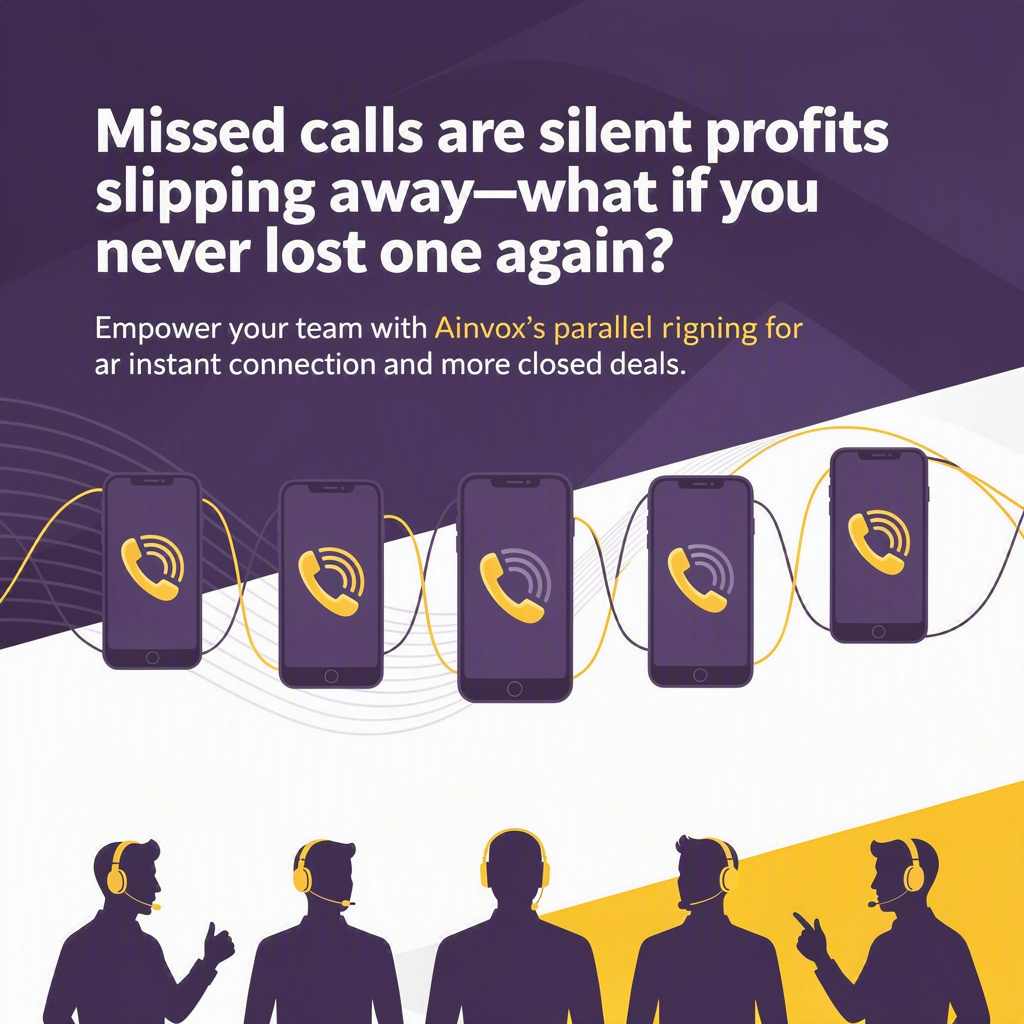
The Business Challenge: Missed Calls Are Costly Opportunities
Handling incoming calls efficiently is a critical challenge for many businesses. Whether it’s a sales inquiry, customer support request, or urgent consultation, the first point of contact often shapes the customer’s impression of your brand. However, common call handling models have inherent limitations that result in missed calls and dissatisfied customers.
Typical phone systems route incoming calls to one agent at a time, leaving customers waiting if that person is busy or unavailable. This single-thread approach causes:
- Long wait times: Customers can get frustrated after repeated rings or hold times, risking abandonment.
- Missed calls: Voicemails or callbacks replace immediate interactions, delaying resolutions.
- Uneven workload: Some team members become overwhelmed while others are idle.
- Lost revenue: Especially for sales teams, every missed call could be an opportunity slipping through their fingers.
In industries where time-sensitive communication is vital—such as real estate, insurance, healthcare, and retail—these challenges magnify. Customers expect swift responses, and competitors are only a phone call away.
Understanding Parallel Ringing: A Smart Solution to Missed Calls
To address these challenges, parallel ringing emerges as a highly effective call routing strategy. Instead of ringing one person at a time, parallel ringing triggers multiple phones simultaneously. The first available agent who answers takes the call immediately.
This method eliminates the bottleneck created by single-agent call distribution, offering several clear advantages:
- Instantaneous response: Multiple team members alerted at once means faster answer times.
- Reduced missed calls: If one agent is busy, another can quickly pick up without delay.
- Balanced workload: Calls naturally distribute across your team based on availability.
- Improved customer satisfaction: Faster connections lead to happier prospects and clients.
- Enhanced sales opportunities: No cold leads due to unanswered calls, translating into more closed deals.
Ainvox’s implementation of parallel ringing combines this strategy with cloud telephony technology, allowing seamless integration without complex hardware or manual call handling. As soon as a customer dials your number, everyone suited to respond receives the alert simultaneously.
Real-World Scenarios Where Parallel Ringing Makes a Difference
Imagine a real estate brokerage where several agents are responsible for new client inquiries. Traditionally, calls go to a receptionist or rotating agent, sometimes requiring callbacks and lost time. With parallel ringing, all available agents receive the call simultaneously. If one agent is on another call, the next free agent picks up immediately, cutting wait times drastically.
Consider a busy insurance office during renewal season—every minute counts. When clients call to review their policies or ask questions, delays can mean lost business. Parallel ringing ensures no call waits too long, leading to increased customer retention.
In retail operations with high foot traffic and multiple sales reps, parallel ringing helps direct calls to the first person ready to assist, whether they’re on the shop floor or managing online sales inquiries. This flexibility improves responsiveness and drives conversions.
Benefits Across Industries
Parallel ringing isn’t limited to sales teams—it benefits any sector where timely communication is crucial. Some industries that see significant advantages include:
- Customer Support Centers: Faster responses reduce customer frustration and improve resolution rates.
- Healthcare Providers: Immediate connections to triage nurses or appointment schedulers can impact patient care quality.
- Financial Services: Quick access to advisors during market hours prevents missed investment opportunities.
- Hospitality and Travel Agencies: Prompt booking confirmations enhance guest experiences.
- Small Businesses: Ensures professional communication even with limited staff, creating trust with clients.
Actionable Tips for Implementing Parallel Ringing in Your Business
If you’re considering parallel ringing, here are some practical recommendations to maximize its effectiveness:
- Assess team size and availability: Determine how many agents should ring in parallel based on your typical call volume.
- Train your team on call etiquette: Since multiple people will receive calls, ensure consistency in greeting and information sharing.
- Integrate with CRM systems: Sync call data with customer records for personalized and efficient follow-ups.
- Monitor performance metrics: Track metrics such as average answer time, missed calls, and conversion rates.
- Adjust routing rules dynamically: Use analytics to refine which agents are included in the ringing groups during peak hours.
Frequently Asked Questions (FAQs)
What exactly is parallel ringing, and how does it differ from sequential call forwarding?
Parallel ringing sends incoming calls to multiple phones at the same time, allowing the first available person to answer. Sequential call forwarding, in contrast, routes the call from one agent to another in a preset order, potentially causing delays if earlier contacts are unavailable.
Will parallel ringing increase interruptions for team members?
While multiple devices ring simultaneously, proper team coordination and setting availability statuses help minimize unnecessary interruptions. Teams can customize who receives calls during specific periods to balance responsiveness and focus.
Can parallel ringing be used with remote or hybrid teams?
Absolutely. Because it operates over cloud telephony, parallel ringing supports remote workers by notifying their mobile devices or softphones, ensuring seamless communication regardless of location.
How does parallel ringing impact customer experience?
Customers benefit from quicker answers and fewer dropped calls. The improved speed of connection creates trust and satisfaction, which can lead to higher retention and referral rates.
Is special equipment required to implement Ainvox’s parallel ringing?
No specialized hardware is necessary. Ainvox’s cloud-based platform allows easy deployment without extra infrastructure, making it accessible for businesses of all sizes.
Summary: Turning Every Call Into an Opportunity
In business, every missed call is a missed chance to connect, serve, and sell. Traditional call handling methods can create costly delays and lost revenue. Parallel ringing, particularly when powered by solutions like Ainvox, ensures that the first available team member answers promptly, minimizing missed calls and maximizing customer engagement.
This approach not only improves responsiveness but also enhances team efficiency and customer satisfaction across various industries. By adopting parallel ringing, businesses create a smoother sales flow, reduce pressure on individual agents, and capitalize on every inquiry.
Your next step: Evaluate your current call management processes and consider how implementing parallel ringing could transform your customer interactions. The difference between a missed call and an answered one might just be the difference between losing and winning your next big client.