Introduction
For many small businesses with multiple locations, managing incoming customer calls can be a constant challenge. During peak hours, phone lines quickly become overwhelmed, leading to missed calls, lost orders, and frustrated customers. This disruption affects both the overall customer experience and daily operational flow.
One common scenario involves cafés or retail outlets that receive a high volume of calls simultaneously across their branches. Without an efficient system in place, customers often encounter busy signals or long hold times, discouraging them from completing orders or engaging with the business.
The Problem in Detail
- Missed calls during peak times: When all branches receive calls simultaneously, lines get clogged and callers cannot get through.
- Lost revenue opportunities: Customers unable to place orders by phone may turn to competitors or abandon their purchase altogether.
- Poor customer experience: Long wait times or busy signals cause frustration, damaging brand loyalty.
- Increased pressure on staff: Employees scramble to manage calls alongside their usual duties, reducing productivity and focus.
- Lack of centralized control: Without an organized approach, it’s difficult to monitor and optimize call traffic among multiple locations.
The Solution
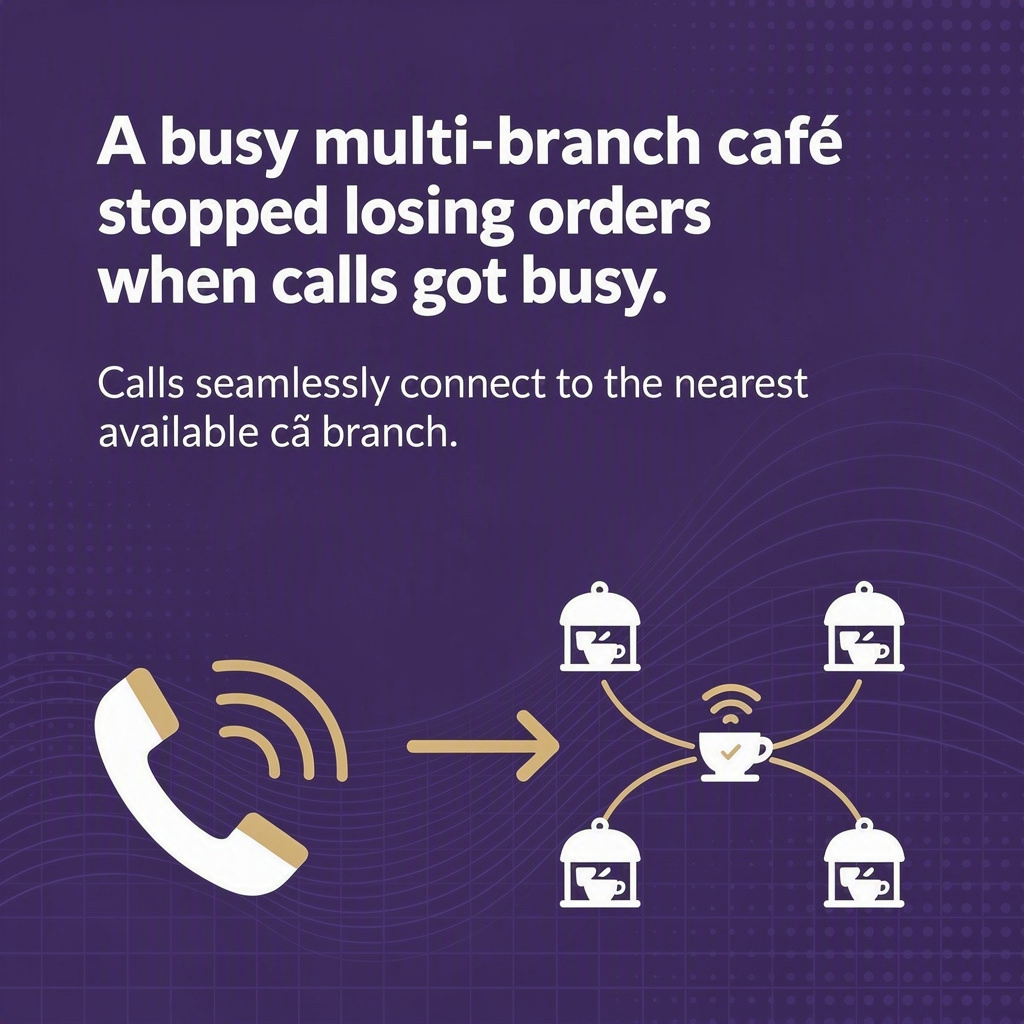
Call routing for multi-branch businesses provides an intelligent way to handle incoming calls through a single central number. Instead of calls bombarding each branch independently, they are automatically directed based on predefined criteria such as location proximity or current call volume.
This system ensures that customers connect to the nearest available branch without delay or dead ends. It balances the load between branches so no single line becomes overwhelmed. As a result, fewer calls are missed, staff remain focused on their core tasks, and customers enjoy seamless service.
Implementing smart call routing does not require hiring additional personnel or investing in complex hardware. Cloud-based solutions like Ainvox offer easy setup and management, enabling businesses to enhance operational efficiency with minimal disruption.
Real-World Scenarios
- Café Chain with Three City Locations: Morning rush hour previously caused busy signals as all branches received simultaneous order calls. With smart routing, calls automatically go to the closest available branch, reducing wait times and missed orders.
- Regional Plumbing Service: Customers calling the main hotline are routed to the technician team nearest to their location, speeding up response times and improving job scheduling efficiency.
- Multi-Outlet Retail Store: Promotional events generate spikes in call volume; the system dynamically directs calls to less busy stores, ensuring every inquiry is handled promptly.
Who This Helps
- Food and Beverage Businesses: Especially cafes and restaurants managing multiple delivery or pickup locations.
- Service Providers: Companies like plumbers, electricians, or cleaning services serving several service areas.
- Retail Chains: Stores with multiple outlets that need centralized customer support via phone.
- Healthcare Providers: Clinics or urgent care centers coordinating patient calls across different branches.
- Customer Support Teams: Any organization aiming to improve call handling without expanding frontline staff.
Actionable Advice
- Analyze Your Call Traffic: Track when your peak call times occur and which branches get the most volume to determine routing priorities.
- Choose Routing Criteria Wisely: Consider factors like caller location, branch availability, and queue length to configure smart routing rules.
- Communicate Changes to Staff: Ensure employees understand new workflows so they can prepare for call distribution adjustments.
- Monitor Performance Metrics: Use analytics tools to review call volumes, answer rates, and customer feedback regularly.
- Test and Adjust: Routinely refine routing settings to address evolving patterns or unexpected bottlenecks.
FAQs
How long does it take to set up call routing for multi-branch businesses?
Depending on your current phone system, setup can range from a few hours to a couple of days. Cloud-based providers like Ainvox offer streamlined onboarding with guided configuration, minimizing downtime and disruption.
Is additional hardware required to implement this solution?
No physical hardware is usually necessary. Modern call routing operates via cloud telephony platforms that integrate with your existing phones and internet connection.
Can I customize routing rules based on my business needs?
Yes. Most solutions allow you to tailor routing based on location, time of day, call volume, or other criteria, giving you flexibility to optimize call flow.
How does call routing improve customer experience?
By connecting callers directly to the nearest or least busy branch, it minimizes wait times and reduces the chance of dropped or missed calls, making interactions smoother and more satisfying.
Will this system work if I have very different call volumes between branches?
Absolutely. Smart routing balances the load by diverting calls away from busy locations to those with more capacity, keeping all branches productive and responsive.
Summary
Managing multiple branch locations doesn’t have to mean dealing with overwhelmed phone lines and frustrated customers. Call routing for multi-branch businesses offers a straightforward, effective way to streamline incoming calls, reduce missed opportunities, and improve operational flow. Businesses can deliver better service without increasing staff or resources.
If your business struggles with distributed calls, consider exploring cloud-based call routing solutions like Ainvox. Taking the first step towards smarter call management can transform how your customers experience your brand.