Addressing Patient Mix-Ups in Multi-Location Healthcare Clinics
Healthcare providers managing multiple locations often face a frustrating challenge: ensuring that patients connect with the right doctor efficiently. When patients call to book appointments or ask questions, the risk of misdirected calls or repeating medical histories can lead to delays, confusion, and dissatisfaction.
This issue grows exponentially as clinics expand, with more branches and doctors involved. Patients dislike explaining their history repeatedly, while staff struggle to manage call flow smoothly. Finding a solution that streamlines communication without increasing overhead is essential for any healthcare organization seeking to improve patient experience and operational efficiency.
The Problem in Detail
- Patient frustration: Returning patients repeatedly explain their medical history during each call, causing annoyance and longer call times.
- Appointment delays: Incorrect routing results in transferred or missed calls, slowing down scheduling processes.
- Staff inefficiency: Front desk teams spend excessive time redirecting calls instead of focusing on patient care and administrative duties.
- Higher operational costs: Adding more phones or hiring extra staff to manage complex call volumes strains budgets unnecessarily.
- Risk of errors: Mistakes in call handling can lead to patients being seen by the wrong provider, affecting continuity of care.
The Solution: Smart Call Routing for Clinics
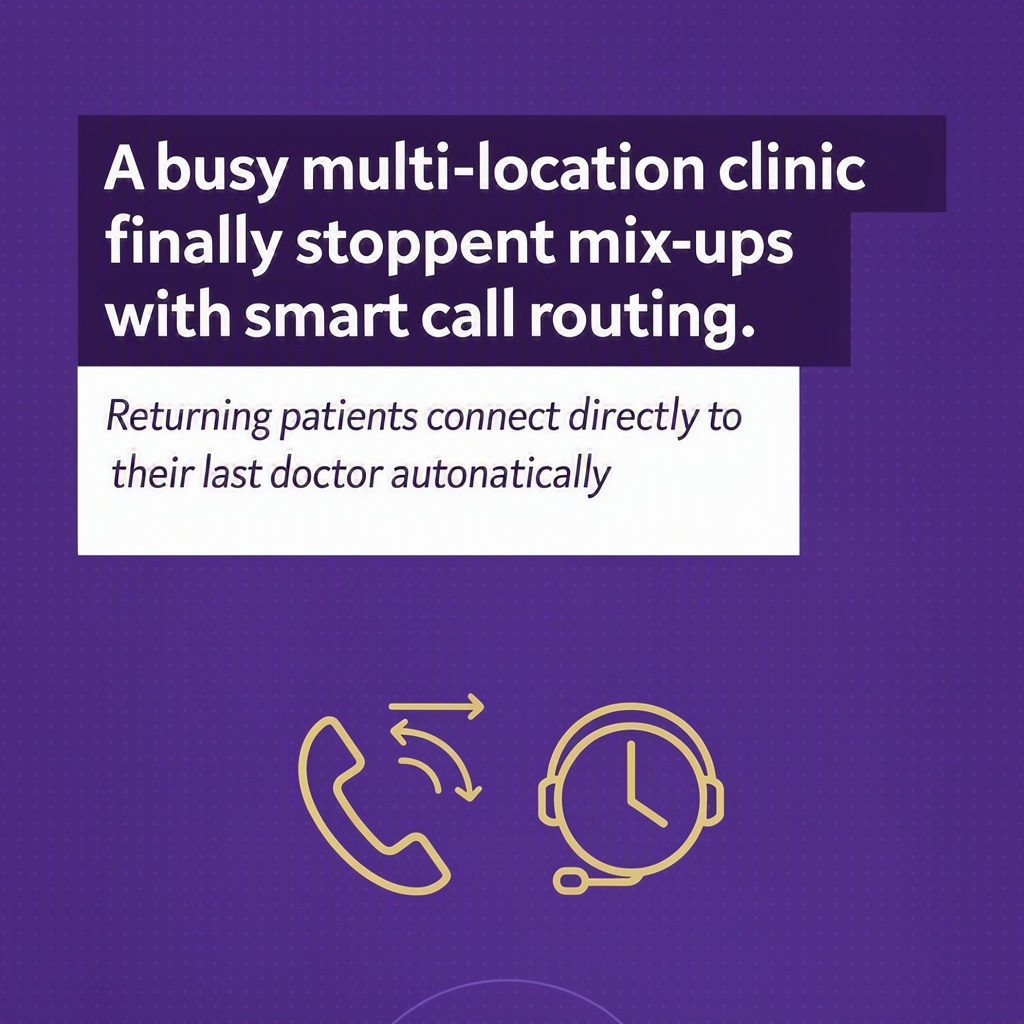
Smart call routing for clinics offers a simple yet powerful way to connect patients quickly with the right healthcare professional. This technology automatically identifies returning callers and routes them directly to the last doctor they consulted, eliminating the need for repeated explanations.
By implementing sticky agent routing, clinics ensure each patient’s call reaches the correct specialist every time. This approach reduces call transfers and wait times, making appointment booking faster and smoother for patients and staff alike. Importantly, this is achieved without adding new phone lines or personnel, maximizing existing resources.
Real-World Scenarios Demonstrating Call Routing Benefits
- Dental Clinic with Multiple Locations: A Chicago-based dental group with four branches uses call routing to send returning patients to the same dentist. This avoids wasted time retelling dental history and improves patient satisfaction across all offices.
- Physical Therapy Centers: Clinics with several therapists benefit from routing to the last therapist a patient saw. This maintains treatment continuity and ensures questions about ongoing therapy plans are answered promptly.
- Specialty Medical Practices: Multi-physician cardiology practices use call routing to direct patients to their assigned cardiologist, avoiding mix-ups that could complicate patient records or delay care decisions.
Who This Helps
- Multi-location Clinics: Keeps communication consistent across various branches, enhancing patient loyalty.
- Dental Practices: Reduces patient repetition and call confusion for better reception workflows.
- Therapists and Specialists: Ensures returning patients reach familiar providers without friction.
- Reception and Admin Teams: Frees staff from excessive call handling, allowing focus on patient support.
- Healthcare Executives: Improves operational efficiency and patient satisfaction metrics simultaneously.
Actionable Advice for Implementing Effective Call Routing
- Assess your current call volume and patterns: Identify frequent callers and common call routing issues.
- Choose a call routing system with sticky agent capabilities: This allows returning patients to be routed to their previous provider automatically.
- Train staff on the new call handling processes: Ensure they understand how call routing improves workflows and patient experience.
- Integrate call routing with patient management software: Synchronizing data helps personalize calls and maintain accurate records.
- Monitor performance regularly: Use call metrics and patient feedback to optimize routing rules and reduce errors.
Frequently Asked Questions
How long does it take to set up call routing for clinics?
Setup time varies depending on the clinic’s size and existing infrastructure but generally can be completed within a few days to a couple of weeks. Cloud-based solutions like Ainvox simplify the process, requiring minimal hardware and quicker integration.
Will call routing require additional phone lines or equipment?
No, most modern call routing systems operate through cloud telephony platforms that work with existing phone lines and devices, eliminating the need for costly hardware upgrades.
Can call routing integrate with our current patient records system?
Yes, many call routing solutions offer integration options with popular patient management systems to synchronize caller information and provide personalized service.
Is call routing suitable for clinics with many specialists?
Absolutely. Call routing is especially beneficial in multi-specialist environments where directing patients to the right expert quickly improves both care quality and patient satisfaction.
What if a patient sees multiple doctors within the same clinic?
Smart routing systems can be configured to handle multiple providers per patient and route calls based on recent visits or patient preferences, ensuring flexibility for diverse care scenarios.
Enhancing Patient Care Through Smarter Call Handling
Effective call routing for clinics addresses a common but significant pain point: making sure patients connect directly with the right healthcare provider each time they call. This not only reduces frustration and saves time but also optimizes staff productivity without added costs.
For healthcare organizations looking to enhance patient experience and streamline operations, investigating smart call routing solutions like those offered by Ainvox is a logical next step worth exploring further.