
Eliminating Missed Client Calls with Smarter Call Routing for Legal Advisors
For many solo legal advisors and small law firms, managing client calls during busy office hours can be a major challenge. When phones ring non-stop, it’s easy to miss important client inquiries or put potential new cases on hold. This often leads to lost business and frustrated clients who expect prompt communication.
Hiring additional staff might seem like the obvious fix, but not every practice has the budget or space to expand. Instead, many find that implementing call routing for legal advisors offers a smarter, more efficient solution. It ensures client calls are handled professionally without overloading the advisor or assistant—and without missing a single opportunity.
The Problem in Detail
When legal advisors miss calls, the impact reaches beyond just one lost opportunity. It often signals deeper operational inefficiencies that affect client satisfaction and business growth. Common symptoms of poor call management include:
- Missed calls during peak hours: Clients calling when the phone is busy may hang up and seek services elsewhere.
- Overwhelmed staff: Solo advisors or small teams face burnout trying to juggle casework and constant phone demands.
- Unreceived messages: Without proper after-hours handling, voicemail or follow-ups get delayed or overlooked.
- Poor client experience: Long wait times or unanswered calls reduce trust and deter future contacts.
- Lost revenue opportunities: Every missed call could mean a missed client, which impacts the practice’s bottom line.
The Solution: How Call Routing for Legal Advisors Eases the Burden
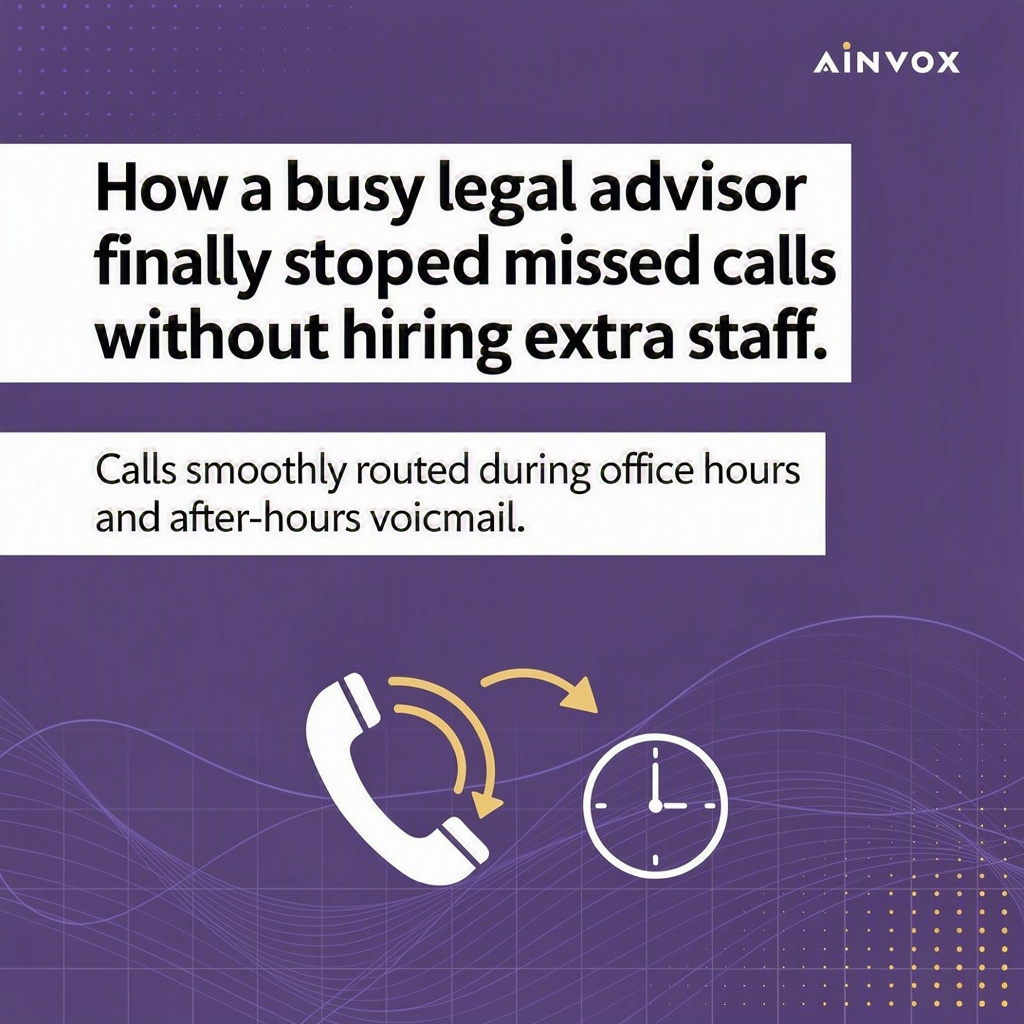
Call routing for legal advisors streamlines incoming calls so that they reach the right person at the right time. During busy office hours, calls can be directed to an assistant or receptionist who handles initial client contacts. After hours, calls can automatically route to voicemail or provide clients with options to leave messages or schedule callbacks.
This approach frees advisors to focus on their legal work without distraction or stress about missing calls. It also means no costly hiring is required because the system efficiently manages call flow based on time or availability. Importantly, clients receive timely responses, enhancing their overall experience and trust in the practice.
Real-World Scenarios
- Solo Family Law Attorney in Chicago: With a high volume of calls during divorce consultations, the attorney’s assistant receives all office-hour calls, while after-hours callers reach voicemail with callback information, ensuring no inquiry slips through.
- Small Estate Planning Firm: Calls related to urgent wills and trusts advice are routed to available team members dynamically, reducing wait times and improving client satisfaction.
- Immigration Lawyer’s Office: At peak season visa deadlines, call routing prioritizes urgent client calls and routes less critical inquiries to voicemail, balancing workload without hiring temp staff.
Who This Helps
- Solo Legal Practitioners: Manage client calls efficiently without expanding the team.
- Small Law Firms: Route calls based on attorney or assistant availability to optimize client response.
- Legal Administrative Staff: Gain tools to streamline call handling and reduce missed connections.
- Client Intake Teams: Ensure call capture during busy periods and after office hours.
- Professional Services Providers: Businesses that rely on personalized call responses benefit similarly.
Actionable Advice to Improve Your Call Handling
- Set clear office hours within your phone system so calls outside these times automatically route to voicemail with a friendly message.
- Use role-based call routing to direct specific types of calls to team members best equipped to handle them.
- Regularly review voicemail and callback logs to ensure timely follow-up on client inquiries.
- Train staff on polite and efficient call answering to boost client confidence from first contact.
- Consider analytics tools that track call volumes and missed calls to identify busy times and improve staffing or routing logic accordingly.
FAQs
How quickly can call routing be set up for my legal practice?
Most call routing systems, including Ainvox, can be configured and deployed within a few days. Setup typically involves defining office hours, routing rules, and voicemail messages to match your firm’s needs.
Will call routing integrate with my existing phone system?
Yes, many cloud-based call routing solutions are designed to integrate seamlessly with standard phone lines, VoIP services, or existing PBX systems, minimizing disruption during implementation.
Is there a risk that clients won’t reach a live person when they call?
Effective call routing balances direct human contact with automation. During office hours, calls usually go to staff, while after hours, callers receive clear voicemail instructions or options for callbacks to avoid frustration.
What are the costs involved in using call routing services?
Pricing varies by provider and features, but typically includes a subscription fee based on call volume or number of users. Automatic call routing can be more cost-effective than hiring additional staff for call management.
Can call routing help reduce staff burnout?
Absolutely. By intelligently managing calls and prioritizing urgent ones, call routing reduces interruptions and allows staff to focus on higher-value tasks, lowering stress and turnover rates.
Maximize Client Contact Without Adding Staff
Managing client calls effectively is essential for legal advisors who want to grow their practice without increasing overhead. Implementing call routing for legal advisors helps maintain excellent client communication, reduces missed opportunities, and creates a sustainable workflow regardless of call volume.
To explore how this can work for your practice, consider starting with a trial or consultation with a cloud telephony provider like Ainvox. Taking this step can transform how your firm handles client interactions—without the need to hire extra staff.