Introduction
Managing phone communications across multiple locations can be a logistical headache for many small businesses. Busy phone lines during peak hours often mean missed calls, lost orders, and frustrated customers who may turn to competitors instead.
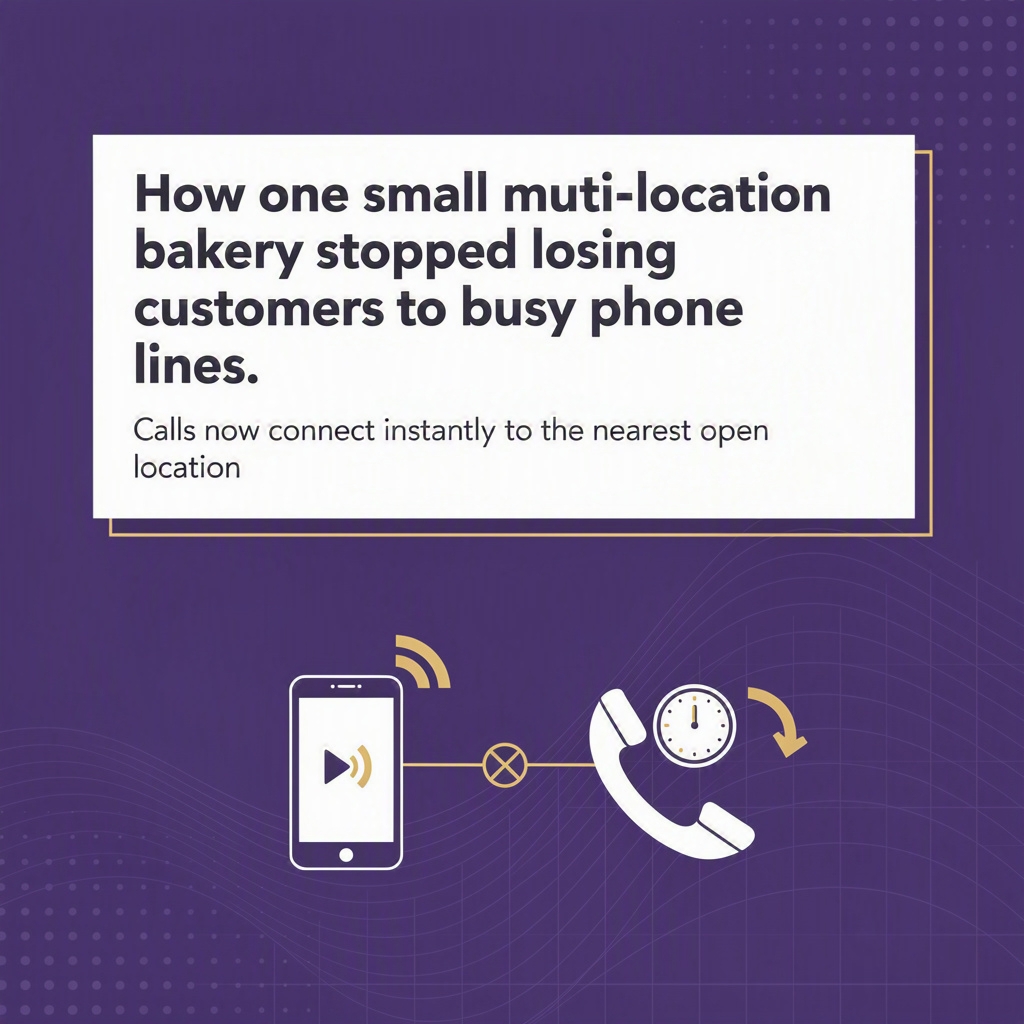
A bakery with three shops in Chicago faced exactly this issue. During rush hours, callers encountered busy signals, leading to lost sales and added stress on staff. Their solution? A centralized system that routes calls instantly to the nearest open shop, eliminating wait times and ensuring no customer was left hanging.
The Problem in Detail
- Missed orders and revenue loss: Customers get busy signals or long hold times, prompting them to hang up or call competitors.
- Customer frustration: Repeated failed attempts make clients view the business as unreliable or unprofessional.
- Overwhelmed staff: Employees juggle answering multiple phone lines while trying to manage in-store duties, reducing operational efficiency.
- Lack of communication clarity: Calls may get passed back and forth between locations, causing confusion and delays.
- Inconsistent customer experience: No standardized method for handling incoming calls leads to unpredictable service quality.
The Solution
Call routing for multi-location businesses provides a streamlined way to manage incoming calls across various branches. Instead of callers encountering busy signals or long waits, the system automatically connects them to the nearest open location based on their time of calling and geographic proximity.
This approach ensures every call reaches a live representative promptly, improving customer satisfaction and preventing lost sales. Staff can concentrate on core operations like baking or serving customers, rather than scrambling to handle phone traffic. Moreover, centralized call management offers businesses better oversight and control over communication flows without complex manual coordination.
Real-World Scenarios
- Bakery with multiple storefronts: During morning rush hour, automatic routing directs calls to less busy locations still open, balancing call volume and ensuring all orders are taken promptly.
- Healthcare clinics: Patients calling for appointments are routed to the nearest clinic with available staff, reducing wait times and enhancing patient care.
- Retail chain stores: Customers seeking product availability or store hours connect immediately to the correct branch, avoiding confusion and repeated transfers.
Who This Helps
- Retail businesses: Manage customer inquiries and orders across multiple sites without dropped calls.
- Food service chains: Handle high call volumes during peak meal times smoothly.
- Healthcare providers: Provide timely access to scheduling and support across locations.
- Service-based companies: Dispatch requests to the closest office or technician efficiently.
- Multi-site franchises: Maintain consistent communication standards and customer experiences everywhere.
Actionable Advice
- Assess your peak call times: Identify when busy signals most frequently occur to focus your call routing efforts effectively.
- Implement geo-based routing: Direct callers automatically to their nearest open location using area codes or caller ID information.
- Train staff on communication protocols: Ensure team members understand the call routing system and can provide consistent responses.
- Monitor call analytics: Use reporting tools to track call volumes, wait times, and dropped calls to continuously optimize routing rules.
- Explore cloud telephony solutions: Choose platforms that offer easy setup, scalability, and integration with existing systems.
FAQs
How quickly can I set up call routing for multiple locations?
Setup time depends on the solution you choose, but many cloud-based call routing platforms can be configured within a few hours to a couple of days. They usually provide user-friendly interfaces to customize routing rules without needing technical expertise.
Can call routing integrate with my current phone system?
Yes. Most modern call routing services support integration with existing landlines, VoIP systems, and mobile phones. This allows businesses to keep their current numbers and hardware while adding advanced routing capabilities.
What are the costs involved with a call routing system?
Pricing varies by provider and features but typically includes a monthly subscription fee based on the number of users or call minutes. Some providers offer tiered plans to accommodate small businesses up to large enterprises. It’s best to request a quote tailored to your specific needs.
Will call routing improve customer satisfaction?
Absolutely. By reducing hold times and preventing busy signals, customers receive quicker responses and reliable service. This positively impacts customer retention, brand reputation, and overall experience.
Is call routing suitable for small businesses with only a few locations?
Definitely. Even small businesses benefit from properly managed call flows, allowing them to maximize every potential lead or order with minimal disruption.
Conclusion
Efficient call routing for multi-location businesses addresses common communication challenges, ensuring that callers are connected quickly to the right location. This leads to fewer missed opportunities and smoother operations for staff.
If your business struggles with busy phone lines or inconsistent customer contact, exploring call routing solutions like those offered by Ainvox can be a straightforward step toward improving your customer experience and operational efficiency.